

NEWS
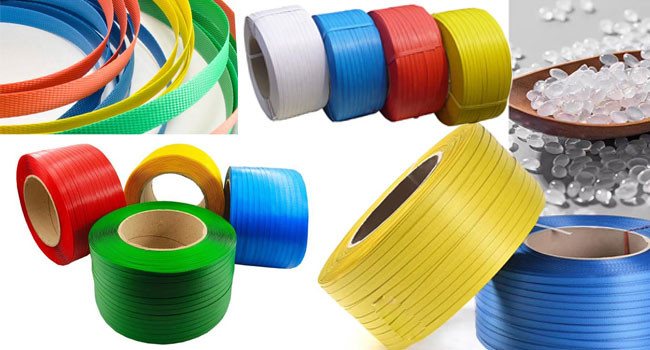
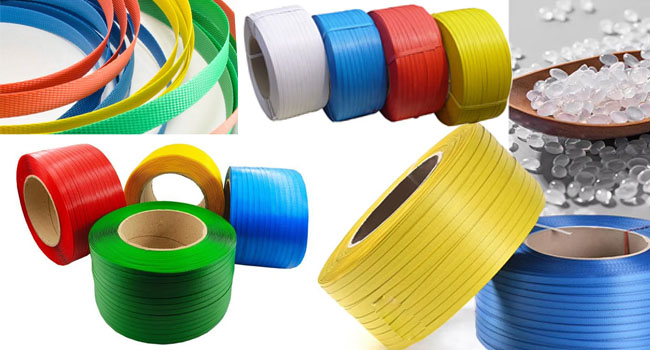
PET plastic steel strapping, as an eco-friendly alternative to steel strapping, is widely used across industries such as steel, aluminum, and paper due to its high tensile strength, temperature stability, and cost-effectiveness. Selecting the appropriate PET strapping requires a data-driven approach, precisely matching strength grades, specifications, process characteristics, and application requirements. Below is a detailed analysis combining key data metrics with practical application scenarios.
Strength grade customization is fundamental, requiring matching of tensile standards to cargo weight. PET strapping is categorized into H, M, and L grades based on tensile breaking load, corresponding to minimum tensile strengths of 441N/mm², 408N/mm², and 343N/mm² respectively. Data indicates that 19mm × 1.0mm H-grade strapping achieves a minimum breaking load of 8.36 kN, suitable for securing 1-2 ton loads. The same specification L-grade strapping has a breaking load of 6.65 kN, ideal for 500 kg to 1 ton cargo. Heavy-duty steel and aluminum ingot bundling requires H-grade strapping. Medium-to-light loads like synthetic fibers and cardboard boxes can use M-grade or L-grade strapping to avoid cost wastage from over-specification. Simultaneously, overlap strength must be appropriately matched: additive-enhanced strapping requires ≥90% overlap strength for fully automatic hot-melt bundling; additive-free strapping requires ≥70% overlap strength to meet manual bundling needs.
Custom specifications require balancing tensile strength requirements with operational efficiency, with key data including width, thickness, and tolerance ranges. For width, the 9-16mm specification maintains a tolerance of ±0.5mm, suitable for lightweight goods; 19-32mm widths have a tolerance of ±0.7mm, suitable for heavy-duty strapping. Thickness selection must be coordinated with width: 0.6mm thin straps paired with 9-16mm widths are ideal for carton stacking; 0.8-1.2mm thick straps paired with 19-32mm widths are used for heavy items like steel and stone. Taking 16mm width as an example: 0.6mm thick H-grade strapping has a breaking load of 4.22 kN, while 0.8mm thick strapping increases to 5.63 kN—a 33.4% tensile strength gain. Additionally, skew must be ≤100mm/2m to ensure stable feeding in fully automatic strapping machines.
Process and material parameters must be customized to suit production and storage environments. For materials, virgin PET strapping tape requires a break elongation controlled between 5% and 10%, with recycled material content not exceeding 30%. Otherwise, elongation may rise above 15%, compromising bundle tightness retention. Regarding temperature resistance, PET has a melting point of 260°C and remains distortion-free below 120°C. It withstands temperatures down to -50°C in low-temperature environments, but cold-temperature customization requires adding anti-brittleness agents to stabilize elongation at break above 8%. Surface finishes include embossed or smooth options: embossed strapping increases friction coefficient by 20%, suitable for manual bundling; smooth strapping adapts to fully automated equipment, boosting feed speed by 15%.
Scenario-based customization requires optimizing data metrics based on industry characteristics. The steel industry requires customized H-grade 19mm × 1.2mm specifications with a breaking load ≥10.03 kN, incorporating rust-inhibiting additives to prevent cargo contamination. For paper industry bundling, M-grade 16mm × 0.8mm strapping offers a breaking load of 5.06 kN, balancing tensile strength and cost—equivalent to 6 tons of steel strapping per ton of material, reducing costs by over 40%. Cross-border transportation scenarios require weather-resistant products ensuring ≤10% tensile strength decay across -40°C to 80°C temperature variations. The food industry mandates additive-free transparent strapping with heavy metal content ≤0.01mg/kg to meet environmental standards.
Customizing PET strapping requires data-driven anchoring: determine strength grades based on cargo weight, optimize specification tolerances according to strapping equipment and efficiency, and adjust process parameters to meet environmental demands. The core objective is achieving a balance between “tensile strength matching, cost control, and efficiency optimization”—avoiding blind pursuit of high specifications that drive up costs or insufficient parameters that risk strap breakage. Moving forward, dynamically adjusting customization plans based on cargo data will become the key direction for enhancing packaging safety and economic efficiency.