

NEWS
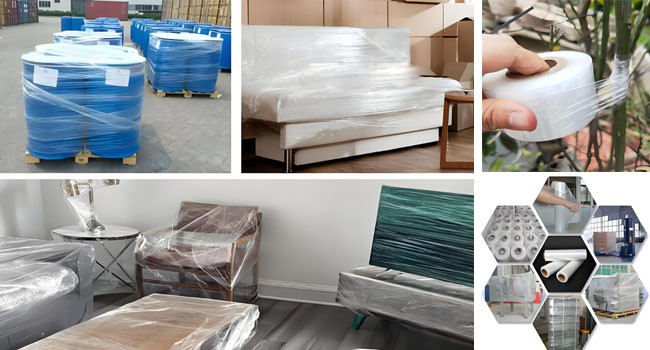
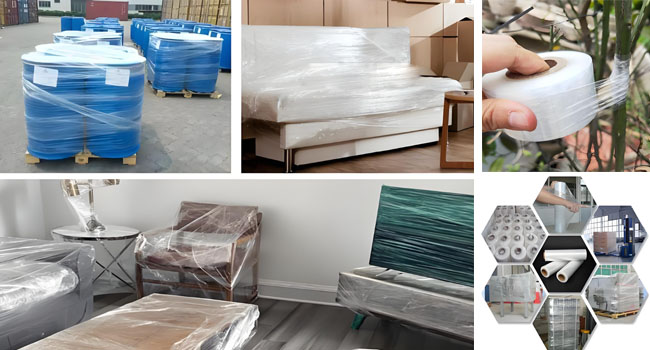
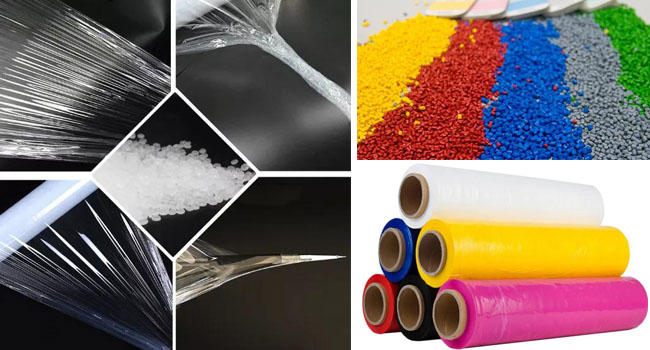
Stretch film serves as a core consumable in cargo packaging, primarily functioning to secure loads, prevent dust and moisture ingress, and guard against scratches. Its performance and specifications must strictly align with cargo characteristics to maximize transportation and storage safety. Variations in cargo weight, shape, material, and transport conditions necessitate distinct requirements for stretch film metrics such as tensile strength, tackiness, thickness, and width. The following outlines specific stretch film requirements for common cargo types, providing a basis for packaging selection.
I. Heavy cargo (such as steel, building materials, and large machinery components)
Heavy cargo pallets typically weigh over 500kg, requiring stretch film to deliver high strength and puncture resistance to prevent packaging failure and cargo spillage. Tensile strength must be ≥20MPa with ≥500% elongation at break to withstand intense stretching during wrapping while maintaining tight surface adhesion. Thickness should be selected between 12-18μm. Thicker materials enhance puncture resistance against sharp edges of steel or building materials. Adhesion should be medium-low (initial tack ≤15#) to ensure secure interlayer adhesion while facilitating easy removal during unloading without leaving adhesive residue. Width must match pallet dimensions, commonly 1000mm or 1200mm, to fully cover pallet edges during wrapping and provide complete protection.
II. Lightweight Small Items (e.g., electronic accessories, stationery, daily necessities)
These goods are characterized by light individual weights and high quantities, typically requiring palletized bundling. The stretch film must prioritize flexibility and conformability while preventing surface scratches. With a tensile strength ≥15MPa and elongation at break ≥450%, it balances stretchability and stability to tightly wrap stacked small items and prevent shifting. Thickness is selected between 8-10μm. This lightweight material reduces packaging costs while minimizing compression on fragile items during wrapping. Medium-high tack (initial tack ≥20#) ensures strong interlayer adhesion, enabling multi-layer wrapping with uniform adhesion and no residue contamination. Available widths of 500mm and 750mm accommodate small pallets, enhancing packaging efficiency.
III. Fragile and Vulnerable Goods (e.g., glassware, ceramics, precision instruments)
The core requirements for stretch wrap used with fragile goods are cushioning and gentle protection to prevent collision damage during transport, while also avoiding adhesive residue. PE stretch wrap is the preferred choice due to its soft, non-corrosive material properties. It should have a tensile strength ≥18MPa and elongation at break ≥480%. When wrapped, it forms an elastic protective layer that cushions vibrations and impacts. Opt for a thickness of 10-12μm—excessively thick film increases packaging pressure, while overly thin film offers insufficient protection. Use low-adhesion film (initial tack ≤12#) combined with pre-stretch technology to minimize friction between the film and cargo surfaces, preventing scratches on glass, ceramic glazes, or precision instrument casings. For high-end precision instruments, composite stretch wrap with a PE cushioning layer may be selected to further enhance protective performance.
IV. Fresh Produce (e.g., Fruits, Vegetables, Meat)
Wrapping film for fresh goods must balance freshness preservation, breathability, and safety. It must comply with food contact standards while preventing spoilage and moisture loss. Prioritize food-grade PE stretch film that is odorless, free of harmful volatiles, and certified for food contact safety. Breathability must meet standards with oxygen transmission rate controlled within reasonable limits to prevent over-sealing that causes fruit and vegetable rot. For meat, pair with an inner layer of cling film, using the stretch film as an outer layer for securing and dust protection. Tensile strength ≥12MPa, elongation at break ≥400%, with excellent flexibility to conform to irregular shapes of fresh produce. Moderate tackiness (initial adhesion 15-18#) prevents sticking to product surfaces. Optimal thickness of 7-9μm ensures thinness while facilitating product visibility.
V. Moisture-Sensitive Goods (e.g., Paper, Textiles, Chemical Raw Materials)
These goods readily absorb moisture and deteriorate, demanding exceptionally high moisture resistance and sealing properties from stretch film to prevent external vapor intrusion. Prioritize high-barrier PE stretch film or composite PP stretch film with a water vapor transmission rate ≤0.5g/(m²·24h). Tensile strength ≥16MPa ensures no breakage during wrapping, forming a sealed protective layer with tight interlayer adhesion and no gaps. Select a thickness of 10-14μm. Thicker materials enhance moisture resistance. Use multi-layer wrapping with a stretch wrapping machine to improve sealing. Choose medium tack (initial tack 18-22#) to prevent layer separation and moisture ingress through gaps. For chemical raw materials, use corrosion-resistant stretch film to avoid chemical reactions with the materials.
VI. Irregularly Shaped Goods (e.g., Tubes, Wires, Irregular Hardware)
Irregularly shaped goods feature unconventional forms with protruding edges and corners, demanding high flexibility, puncture resistance, and conformability from stretch wrap. The wrap must adapt to complex contours while preventing localized gaps or loose coverage. Tensile strength ≥18MPa, elongation at break ≥500%, with excellent extensibility to wrap curved pipe surfaces, wire coils, and other irregular areas. Thickness: 11-15μm, providing strong puncture resistance against sharp edges of hardware components and pipe joints. Medium-high tack (initial tack 20-25#) ensures the film adheres tightly to cargo surfaces without slippage. Optional tear-off perforations facilitate manual cutting for enhanced packaging efficiency. Customizable widths accommodate pipes of varying diameters or irregularly shaped cargo dimensions.
VII. General Requirements
Regardless of cargo type, stretch film must comply with environmental standards, be recyclable, and prevent pollution. For low-temperature transport scenarios (e.g., cold chain fresh produce), select low-temperature resistant stretch film that remains crack-free and maintains adhesion integrity at -20°C. For long-haul shipments, opt for pre-stretched film with a 3-5x stretch ratio to reduce material consumption while enhancing packaging tightness. Simultaneously, film specifications must be adjusted based on pallet dimensions and stacking height to ensure secure, efficient, and cost-effective packaging.