

NEWS
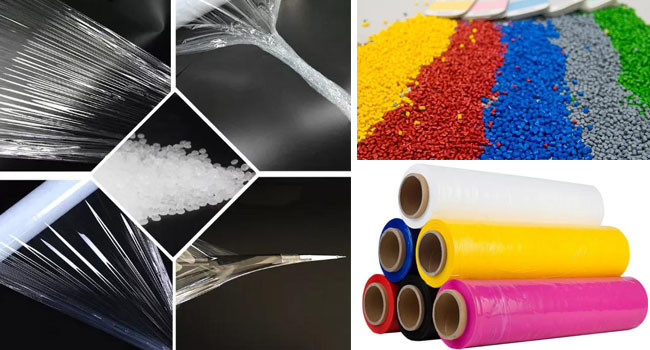
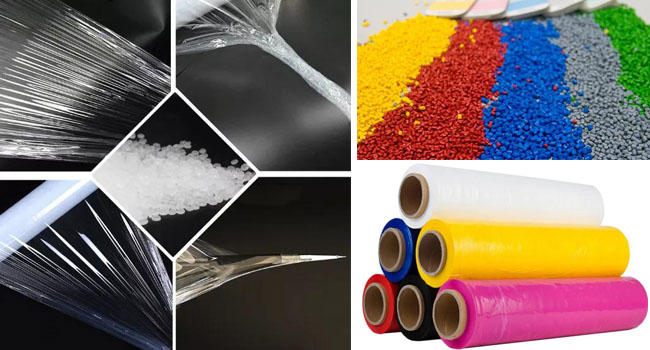
As the core component of stretch wrap, the base resin type and properties determine the product's fundamental mechanical characteristics. Currently, polyethylene (PE) series dominate the market as the primary substrate, replacing the earlier PVC-based materials that lacked environmental friendliness and sufficient stretchability. Linear low-density polyethylene (LLDPE) is the most widely used substrate, with variations in its copolymer monomers directly influencing performance: C4-LLDPE offers lower cost and moderate stretch ratios, making it suitable for manual packaging scenarios; C6 and C8-LLDPE feature more optimized branched structures and lower crystallinity, significantly enhancing longitudinal elongation, transverse tear strength, and puncture resistance—making them suitable for high-ratio pre-stretch requirements in machine applications. Metallocene PE (MPE), as a premium base material, features a narrow molecular weight distribution allowing precise control of physical properties. However, its processing window is demanding, typically requiring a 5% blend with LDPE to reduce melt viscosity and balance surface smoothness with processing stability.
The choice of self-adhesive material determines the interlayer adhesion of stretch wrap, which is crucial for ensuring packaging integrity. Currently, mainstream self-adhesive solutions fall into two categories: PIB (polyisobutylene) and its masterbatch exhibit strong tackiness, enabling tight film adhesion. However, they suffer from a prolonged migration period (approximately 3 days) and significant temperature sensitivity, requiring storage between 15°C and 25°C to maintain stable adhesion. The VLDPE (Very Low Density Polyethylene) compounding solution is better suited for industrial production. While its adhesive strength is slightly lower than PIB, it offers high stability and requires no specialized processing equipment. Adhesive viscosity can be controlled by adjusting the amount of LLDPE in the adhesive layer, making it the preferred self-adhesive material for three-layer co-extruded stretch wrap. Early EVA self-adhesive materials have been phased out due to high costs and odor issues.
The scientific formulation of auxiliary materials optimizes the comprehensive performance of stretch wrap and expands its application scenarios. Adding medium-density linear polyethylene (LMDPE) to the non-adhesive layer enhances longitudinal elongation and yield strength while reducing the friction coefficient, preventing pallet adhesion. For specialized requirements, additives like antistatic agents and UV stabilizers can adapt stretch film for electronics handling or outdoor storage. However, strict dosage control is essential, as excessive additives increase surface crystallization and reduce transparency. Additionally, thickness uniformity—a critical quality metric—directly correlates with the melt flow index of the base resin. Poorly flowing raw materials often result in uneven film thickness, leading to localized strength deficiencies.
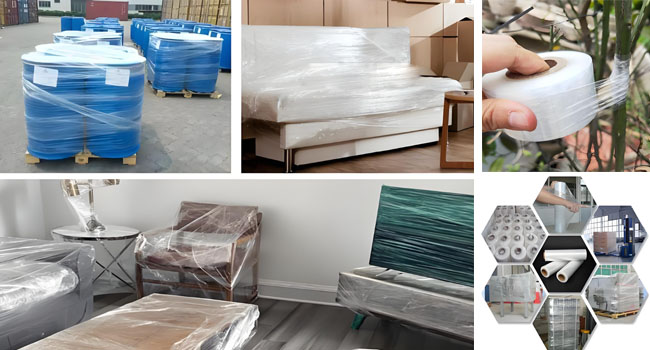
Raw material selection must balance performance compatibility with application requirements, avoiding blind pursuit of high-end options or cost compression. For machine-applied stretch wrap, prioritize C6/C8-LLDPE or MPE base materials paired with VLDPE self-adhesive layers to ensure resistance to breakage at high stretch ratios and meet puncture strength standards. Manual packaging film may utilize C4-LLDPE base material to balance cost and fundamental performance. For food and pharmaceutical packaging, stretch film must strictly employ odorless PE raw materials compliant with sanitary standards, eliminating heavy metals and harmful migration exceeding limits. Amid environmental trends, research and application of biodegradable base materials are advancing gradually, yet a balance must be achieved between degradation performance and mechanical properties.
The essence of stretch film quality control lies in the meticulous management of raw materials. From selecting the base resin and matching self-adhesive materials to formulating the ratio of auxiliary additives, every step directly impacts the final product's performance. Manufacturers must establish a scientific raw material system based on application scenarios, processing techniques, and cost budgets. Simultaneously, strengthening raw material testing and formula optimization is essential to produce stretch film products that combine reliability, stability, and cost-effectiveness, thereby providing core assurance for logistics packaging safety.